Longevity in Practice:
A 10-Year LiveRoof® Case Study at LMU
Los Angeles, CA | Florasource Ltd.
What does a green roof really look like after 10 years – and what does it reveal about long-term performance and maintenance?
Envisioned by Dr. Richard Plumb, then Dean of the Seaver College of Science and Engineering, Loyola Marymount University’s Life Sciences Building was conceived as a magnet—designed to attract top faculty and students while reflecting the university’s commitment to innovation and sustainability.

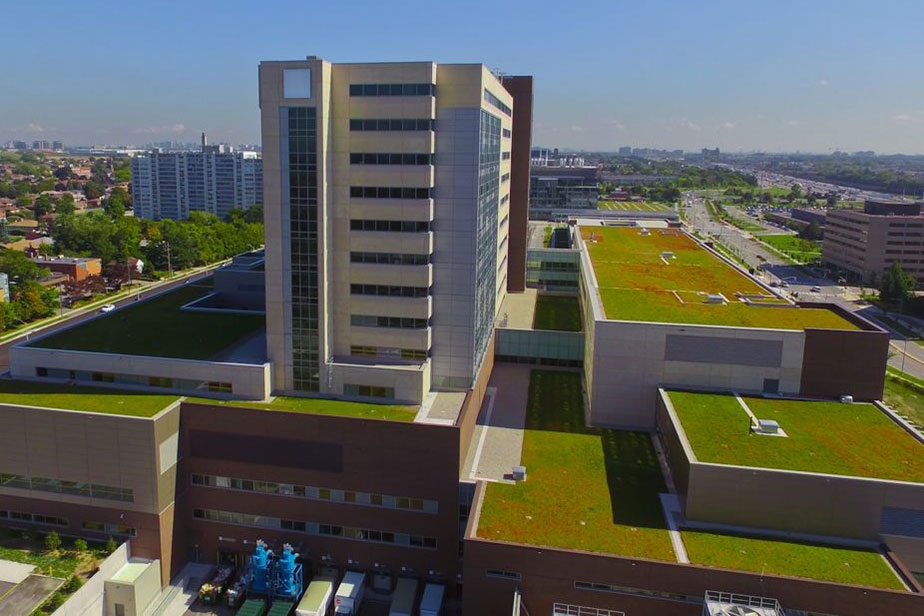
Early Establishment (2015) – Uniform plant coverage from day one eliminates the typical grow-in period.
Completed in 2015, the building integrates a multi-level LiveRoof® system that connects architecture, landscape, and learning. More than a decade later, it stands as a compelling example of both the longevity—and adaptability—of green roof systems.
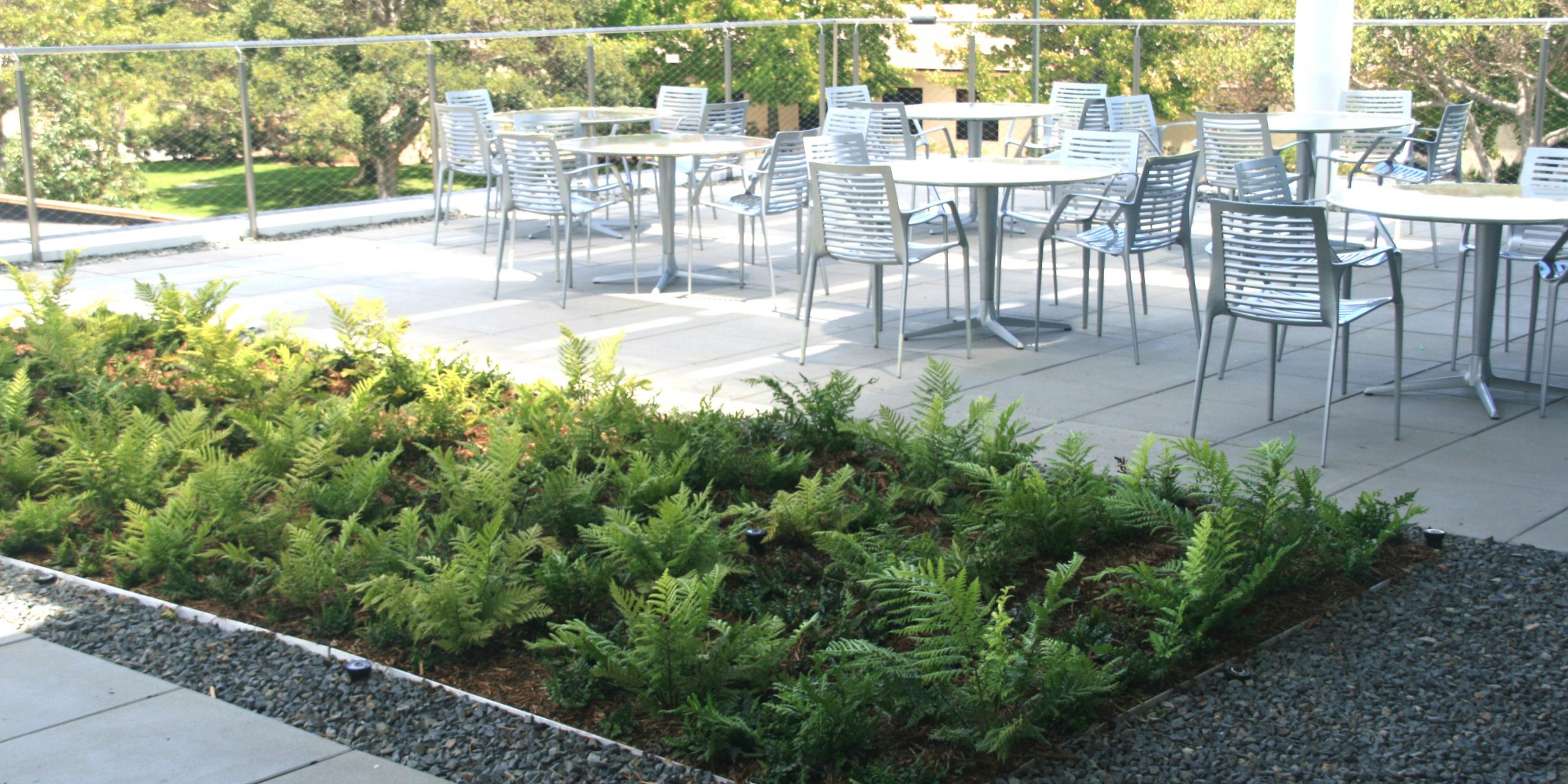
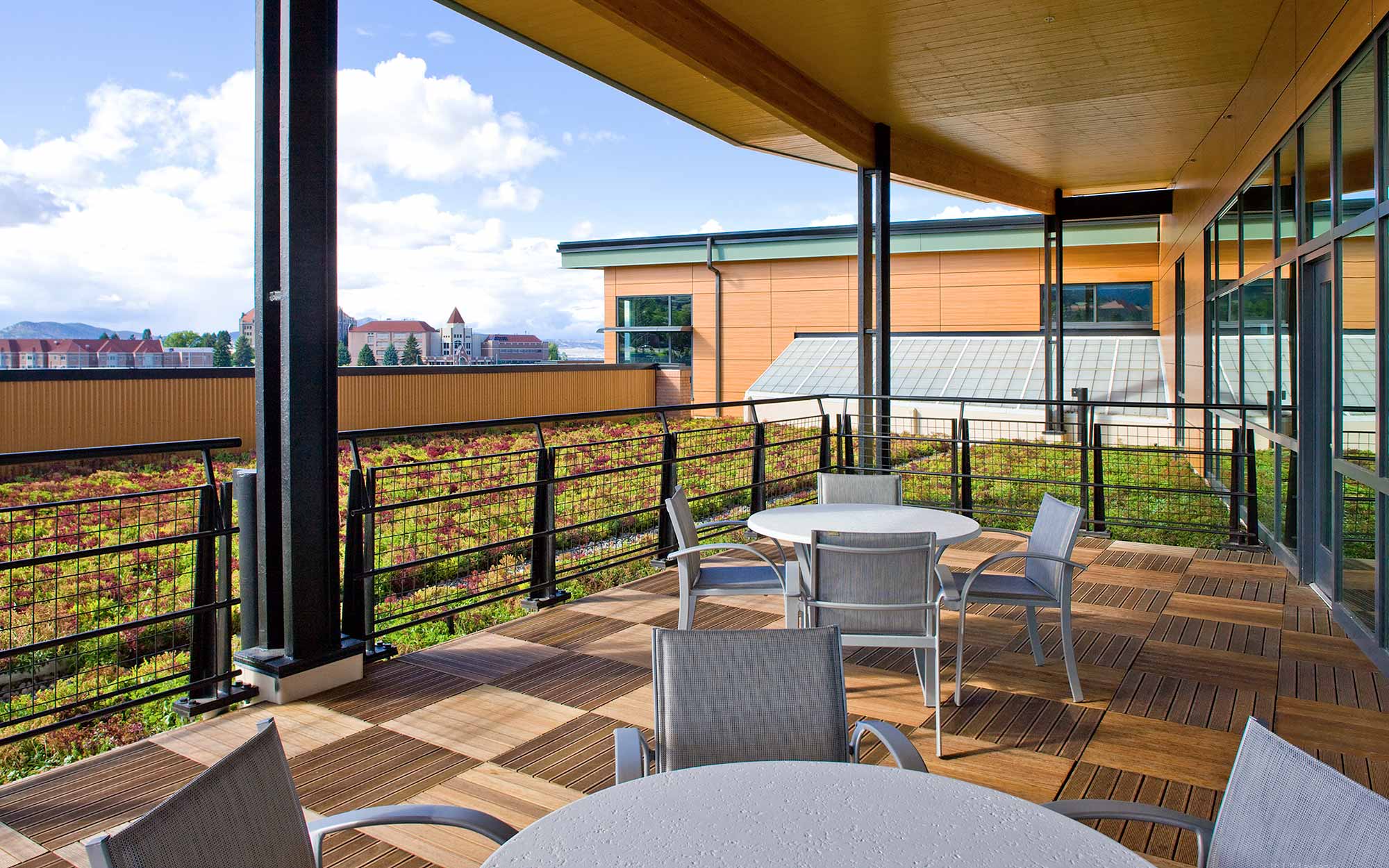
Amenity Space (2016) – Deep LiveRoof® modules support diverse plantings and usable green roof space.
A Green Roof That Connects the Building
CO Architects’ design incorporates 7,874 square feet of LiveRoof green roof areas, anchored by a dramatic 20% sloped main roof that links all three levels of the building. (CO Architects – additional project information)
Rather than functioning as a standalone feature, the green roof extends the openness of the ground-level courtyard upward, creating a continuous visual and physical connection throughout the structure. The sloped system provides access to a research garden and amenity spaces on the second level, while the third-floor terrace is surrounded by vegetated green roof areas.
This integration reinforces a key design principle: when thoughtfully executed, green roofs enhance not only building performance, but the overall spatial experience.
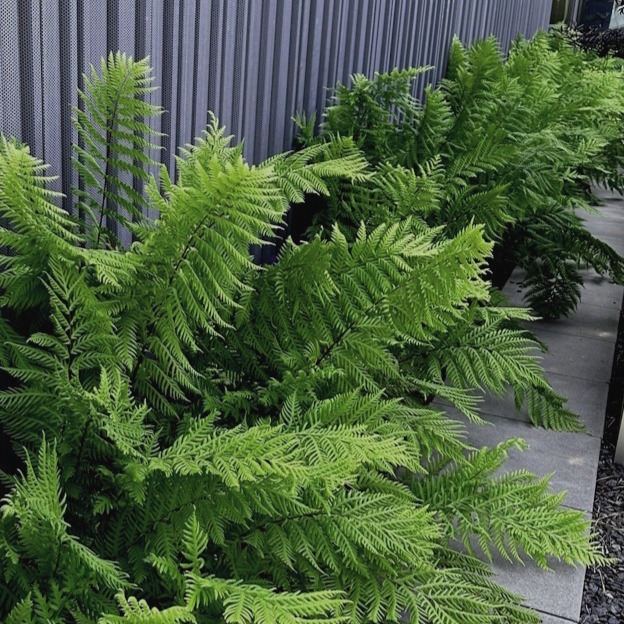
Long-Term Performance (2024) – Original fern plantings remain healthy more than a decade later.
Longevity in Practice—And the Role of Maintenance
Ten years on, the installation clearly demonstrates the durability of the LiveRoof system. Original plantings of Woodwardia ferns and Muhlenbergia dubia remain established and thriving, underscoring the system’s ability to support long-term plant health.
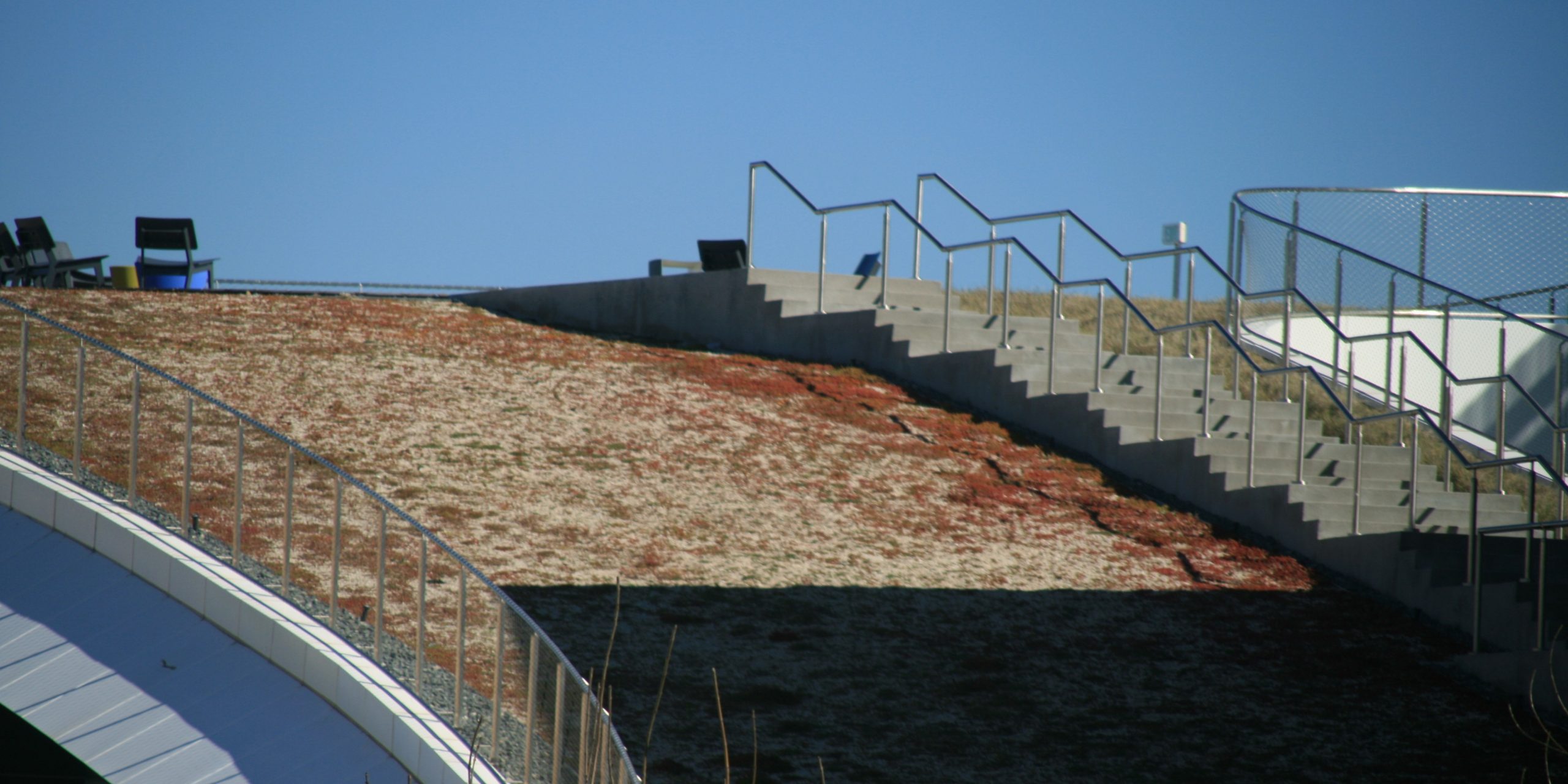
Maintenance Challenges (2018) – Inconsistent maintenance led to visible decline in portions of the roof.
At the same time, the project provides a valuable lesson. Portions of the main roof experienced decline due to lapses in maintenance—missed fertilization, irrigation system failures, and persistent weed intrusion from surrounding landscapes. Left unaddressed, these pressures allowed unwanted species to establish and spread.
Like any landscape, a green roof’s long-term success is directly tied to consistent, informed care.
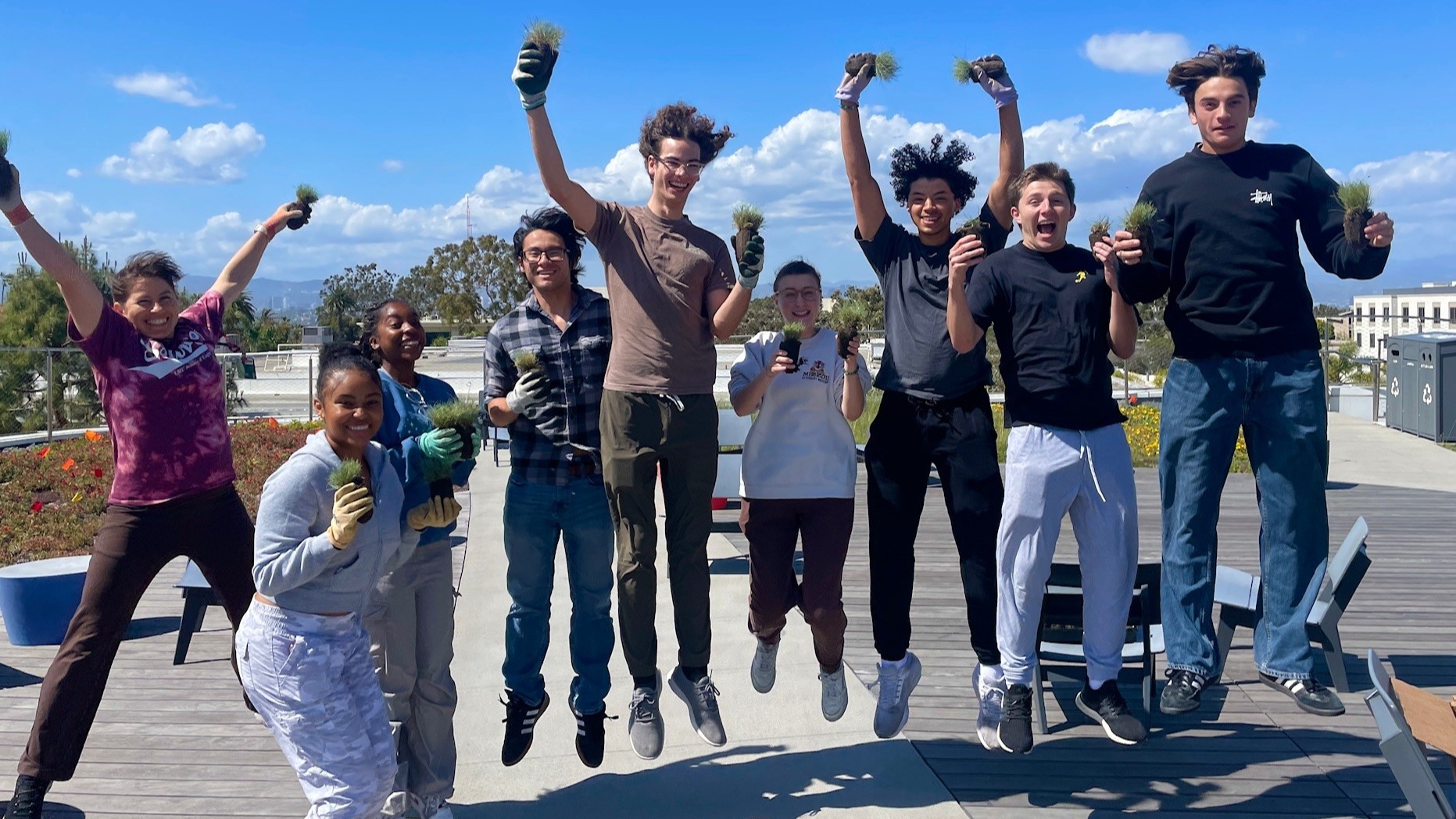
Stewardship (2026) – the “Green Team” ) – Student involvement supports long-term care and research.
Renewal Through Research and Engagement
In March 2023, the roof entered a new phase. With support from campus administration and facilities management, a biology professor, a senior student, and a volunteer group initiated a study of the green roof and began a gradual transformation.
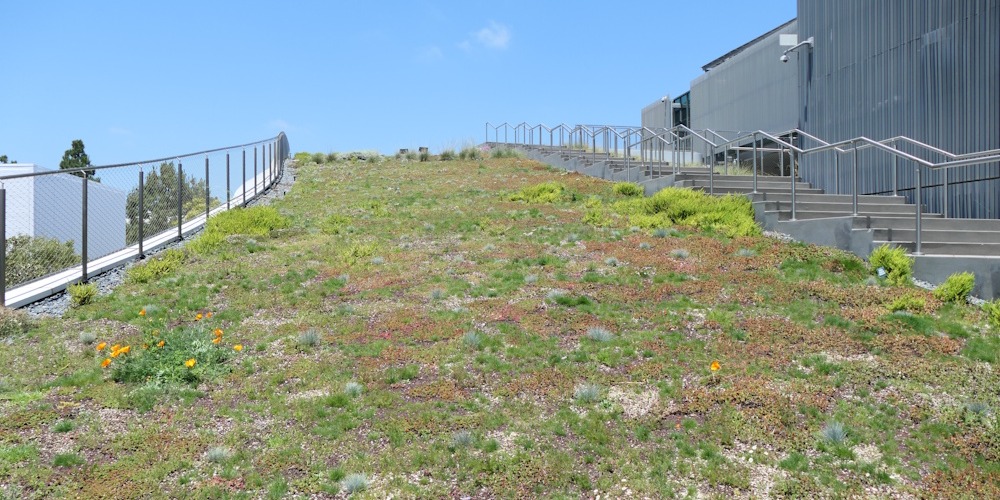
Meadow Conversion (June 2024) – Beginning of the Main green roof meadow conversion
The planting palette evolved into a flowering meadow system, replacing the poorly maintained original roof plant theme with a mix of California and Western native grasses, annuals, perennials, and drifts of the original Sedum.
This shift delivered measurable improvements:
- Enhanced seasonal interest and ecological diversity
- Increased presence of birds and insect pollinators
- Increased commitment to consistent care.
Just as importantly, the process re-engaged the campus community, reinforcing the roof’s role as both landscape and learning environment.
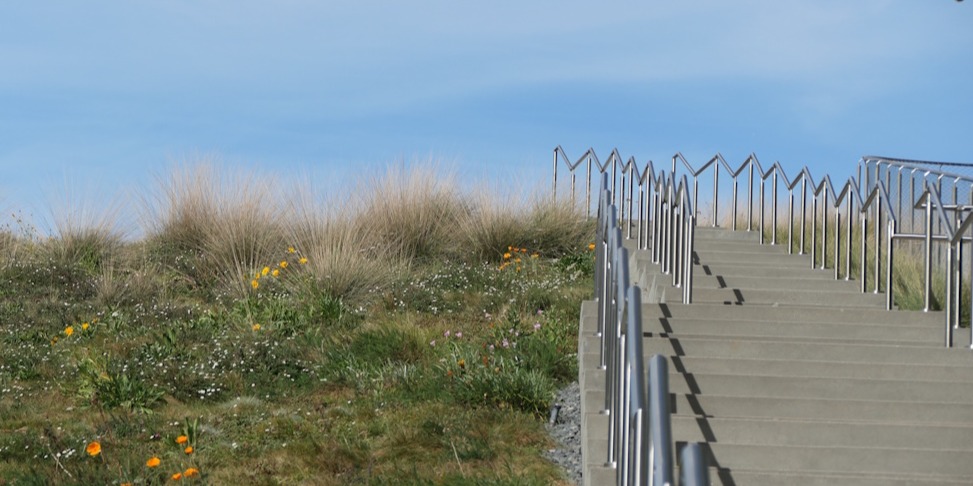
Mature System (2026) – A revitalized green roof—dense, diverse, and high-performing.
Performance Benefits
The Life Sciences Building green roof continues to deliver multiple long-term benefits:
- Energy Performance – Vegetation helps cool the structure below, reducing heat gain
- Roof Longevity – Protection from UV exposure and temperature extremes extends membrane life
- Stormwater Management – Rainfall is absorbed and slowed, reducing runoff
- Biophilia & Habitat – Provides meaningful green space while supporting biodiversity
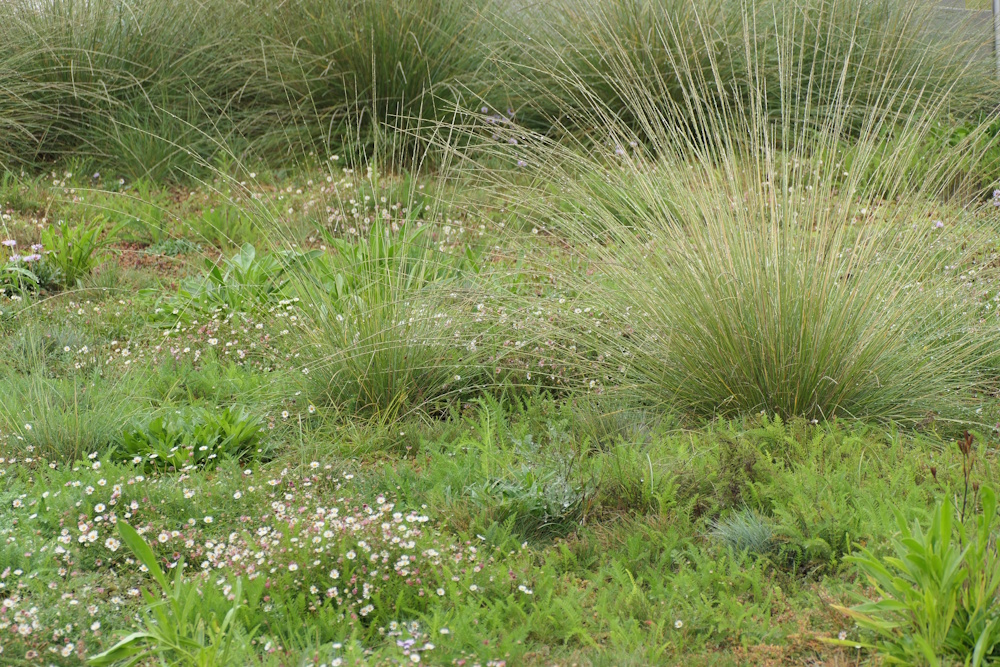
Meadow Conversion (2025) – Native grasses improve biodiversity and reduce weed pressure.
A Living Laboratory
Beyond performance, the green roof serves as a hands-on educational resource for students and faculty. It supports ongoing research across multiple disciplines, including:
- Botany and plant performance
- Ecology and habitat systems
- Entomology and pollinator activity
- Soil science and environmental conditions
This direct engagement transforms the roof into an active extension of the classroom.
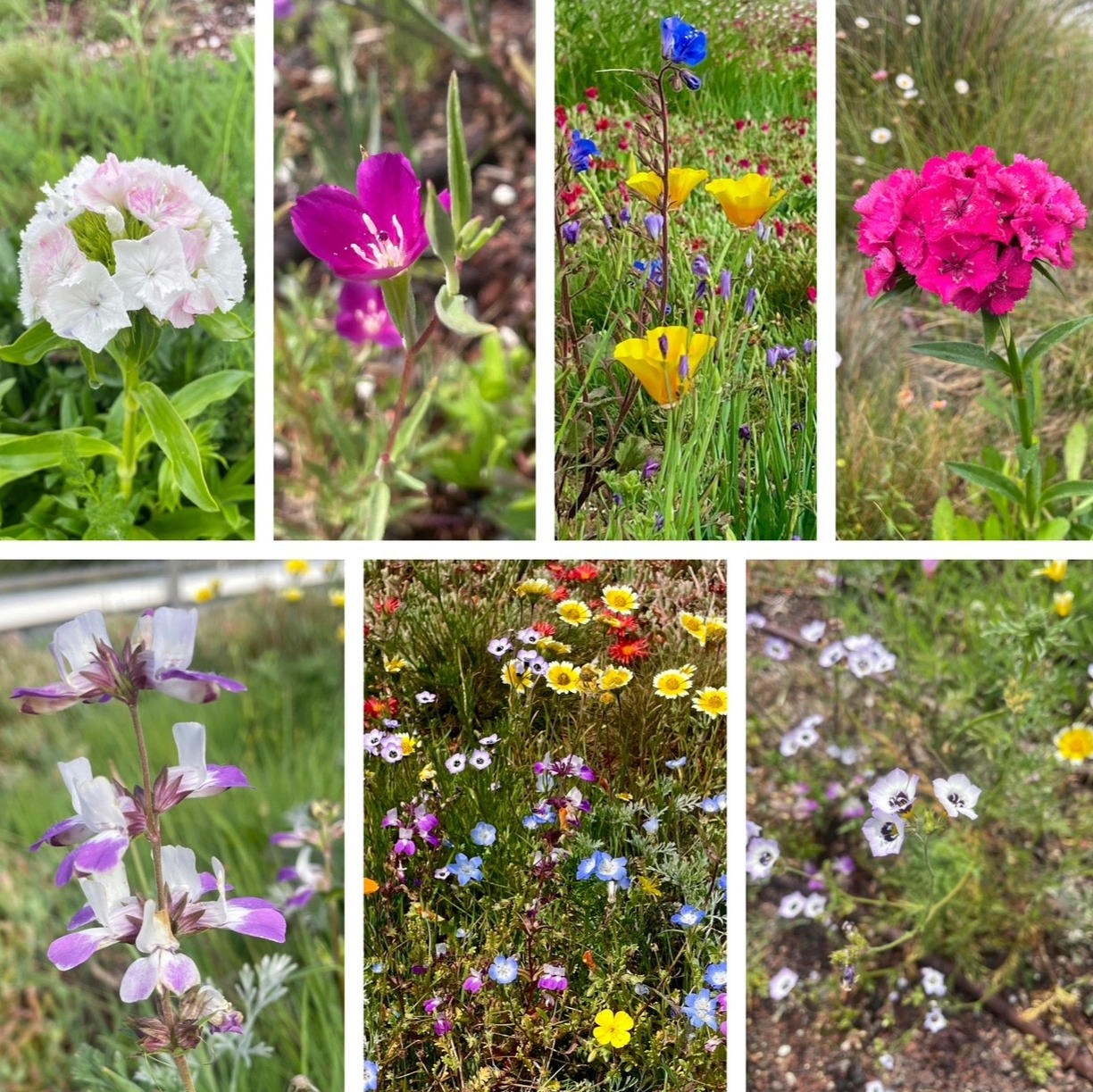
Peak Bloom (2026) – Seasonal flowering enhances visual impact and pollinator habitat on the revitalized LiveRoof® green roof.
Designed to Evolve
The story of LMU’s Life Sciences Building is not just about longevity—it’s about resilience. Even after periods of maintenance challenges, the LiveRoof system provided a stable foundation for renewal and adaptation.
For architects, landscape architects, and building professionals, the takeaway is clear: a well-designed green roof can evolve, improve, and continue to deliver value for decades.
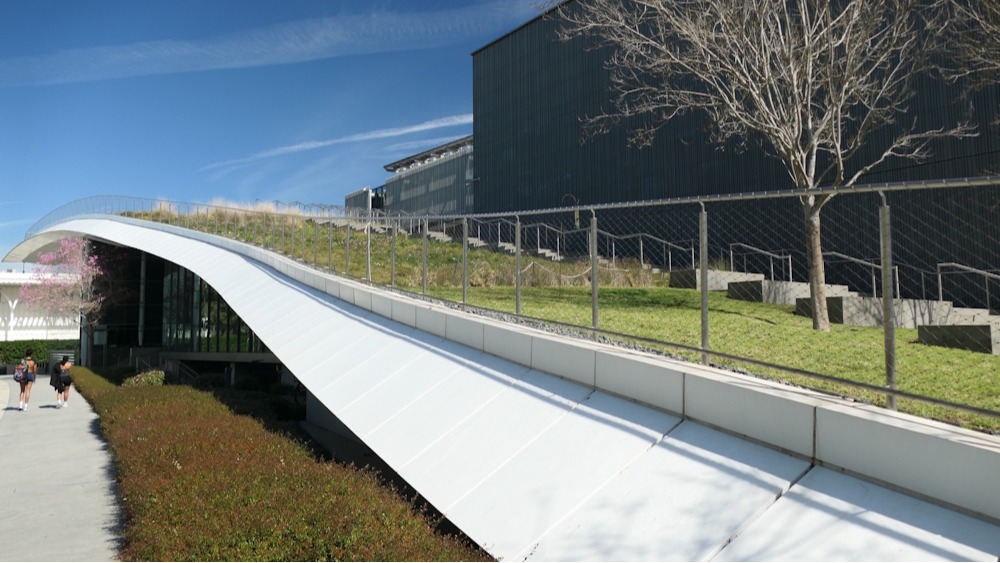
Mature System (2026) – LMU Life Sciences Building – Main Green Roof – February, 2026.
About This Series
This is the fourth installment in our ongoing series, Longevity of LiveRoof® Green Roofs, where we examine the durability and long-term performance of LiveRoof systems across North America.
Jodi Griffin is the Business Development Manager for LiveRoof® Global. Questions? Reach out anytime at jodi@liveroof.com.